Where Should You Buy Your Cleaning Supplies?

From cleaning chemicals to microfiber cloths to mop buckets, you need supplies and equipment to clean your customer's homes. But is there a "one-stop shop" that will best suit the needs of your cleaning company?
There are plenty of options available and the decision can sometimes be overwhelming. You can buy supplies from janitorial distributors, big box stores, on-line stores, local retailers or even buying groups.
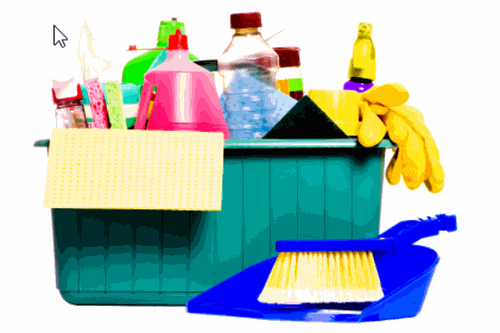
Sources to buy cleaning supplies
Here are the most popular sources we have found our members use and we have included a few highlights (or lowlights) of what each of these sources has to offer.
Janitorial Supplies Distributors
They have working knowledge of the chemicals and equipment that you need to successfully run your cleaning business. They can provide SDS sheets, offer suggestions and advice, rent equipment, and even provide training to you and your employees.
Janitorial distributors also keep records of your purchases. If you forget the name of a particular chemical that worked for you in the past, they can track down that information for you. Distributors have high quality products, can offer volume discounts and let you know when manufacturers are offering specials. In addition, if a piece of equipment breaks down, your distributor may be able to fix it for you.
“You will want to develop a relationship with your supplier for reasons such as the training they can provide on the products they sell. If cultivated correctly, your supplier can become your most valuable business partner,” says Sharon Cowan, CBSE, of Cleaning Business Consulting Group.
Big Box Stores
Walmart, Home Depot, and Costco are a few examples of big box stores. They sell an assortment of chemicals, supplies and even equipment. However, more than likely they will not provide you with SDS sheets or keep track of your purchases. Prices may be lower, but you will not get any training or support from employees at a big box store. If you buy equipment from a big box store, you will have to send it back to the manufacturer for repairs or service.
Also, big box stores don't always carry the same lines from vendors such as microfiber cloths. So if you're color-coding your cloths to avoid cross-contamination the way a responsible cleaning company does, you may be out of luck when they change their microfiber vendor and now carry a whole different selection of colors.
Some companies are now combining the best of both worlds. Companies such as Jon-Don have extremely large retail outlets where customers can shop their fully stocked shelves or option to order over the phone or online. Jon-Don also offers hands on training seminars and industry certifications at all their locations.
On-line Stores
Online giants like Amazon sell about everything under the sun, including cleaning supplies and equipment. There are also many specialized janitorial supply stores, such as ULINE or Betty Mills that will no doubt have everything you need for your cleaning business also. You can easily shop and compare prices with just a few clicks of your mouse.
Although you may find a bargain or two on cleaning chemicals, they are not likely to provide you with SDS sheets (you can ask), guarantees or information on how to use the product.
They sometimes post a price that is irresistible and then gouge you on the inflated shipping and handling fees. They may also claim “free shipping” when in fact they are increasing product prices to cover those so called “free” charges. Do your due diligence and read all the fine print before making your purchase.
Local Retailers
Your local retailer, such as the neighborhood grocery store or Dollar General (there seems to be one on every corner these days) have wood cleaners, toilet bowl cleaners, basic cleaning supplies, paper and trash can liners. These are not industrial-strength products, but if an employee runs out of a chemical or supplies while cleaning a home, it might be your only choice.
However, the biggest problem with local retailers is that they generally sell ready-to-use products, which is convenient for home owners that only use the products occasionally. But it's not cost effective for professional cleaners because you're paying for all the extra water used to dilute those products and all the extra shipping costs involved.
Buying Groups
DPA are examples of buying groups. They are a group of end users or janitorial supply houses that combine their buying power together and purchase from manufactures. The key is to have a large group of companies that would buy from those manufactures. You will have to meet levels every year or quarter.
For example, most hospitals and clinics usually belong to buying groups for their paper and plastic needs simply because they can save themselves thousands of dollars. A buying group can save you a lot of money and it can take the janitorial houses out of the loop if done right.
Cheapest doesn't always mean “cheapest.”
Many people think that by shopping around using a variety of suppliers such as big box, internet, or supply houses, they are saving themselves a ton of money. However, what people tend to overlook is how much time and effort they are actually putting into finding the lowest costs for their chemicals, tools, and equipment.
Sometimes it just makes more sense to focus on one source, such as a local janitorial distributor to make purchases; all at one time. You can also negotiate a volume discount in some instances, saving your cleaning company even more money.
You get what you pay for! Most of the time anyway.
Everyone loves to save a few pennies when they can. But some people tend to focus on price only and forget about quality or performance. Think of it this way, you can purchase a 50 ct. package of paper plates for $1.99 at your local grocer. So why by the brand name 50 ct. package that retails for $3.99? They are both “paper plates” so it just makes sense to buy the inexpensive ones, right?
Well, if you have ever tried to use those micro-thin, cheap plates, you end up using 3 or 4 at a time or your food ends up on the floor. The same is true for cleaning chemicals, supplies, and equipment. The generic window cleaner you just purchased online for almost half the price of the name brand, may seem like a great deal. When in fact 99.9% of what you just bought is water. And you end up using a lot more of a poor performing product, your cleaners work harder to get the glass clean, and with less than satisfactory results.
No matter where you buy from, it's always best to plan ahead and make sure that you have all the cleaning supplies and equipment that you need on hand. The choice of where you buy supplies will not "make or break" your cleaning company. However, knowing that you have a dependable source for your equipment and supplies and having a good working relationship with that company will mean one less headache for you as you grow your cleaning business!
 |
Attention non-members. We have the resources to make your cleaning company profitable. Follow the link for more information on Pricing and Estimating resources available to members. Start making your business profitable today! This page gives details of everything you get with membership |