Coronavirus 2019 (COVID-19) Pandemic Information
The Coronavirus (COVID-19) is quickly spreading throughout the world and cleaning companies play an important role in reducing the chance of spread. But many are not prepared so The Janitorial Store has compiled some of the most useful information to help you deal with this fast-spreading virus.
Thanks to ISSA, the CDC, OSHA and other resources for some of this information.
Regarding communication with your clients, if you have not yet contacted them about the precautions you are taking and recommendations, then do so as soon as possible. We are seeing many facilities reaching out and relying on their cleaning company to provide them with a plan. Not only do they want to know what you're currently doing to disinfect their building, they want to know if you have a plan for major cleanup should an employee or visitor have been diagnosed with the virus.
Resources for Information about Coronavirus (COVID-19)
We recently sent out a Pandemic Plan for COVID-19 to our members. We have decided to open that up for any cleaning company that needs it. Download link below.
Coronavirus – COVID 19 Pandemic Plan
OSHA's Guidance on Preparing Workplaces for COVID-19
CDC's Information Page for COVID-19
Latest news from the World Health Organization (WHO)
SARS-CoV-2 And COVID-19: What's The Difference?
Recommended PPE (Personal Protective Equipment
Recommendation for Using DISINFECTANTS
EPA's List N: Disinfectants for Use Against SARS-CoV-2
Disinfectants for Use Against SARS-CoV-2
Emerging Viral Pathogen Guidance for Antimicrobial Pesticides
Report Reveals Effective Cleaning Solution for Newly Named Coronavirus
Unemployment Insurance Flexibilities During Covid-19 Outbreak
SBA to Provide Disaster Assistance Loans for Small Businesses Impacted by Coronavirus (COVID-19)
PROTOCOL FOR CLEANING AND DISINFECTING
GO HERE TO WATCH A VIDEO ON THE PROTOCOL FOR CLEANING AND DISINFECTING.
https://www.myhousecleaningbiz.com/members/cfmbb/messages.cfm?threadid=974E20CB-0D4B-CABA-D44D35F2B4CAAD7B
Considerations for How to Charge for COVID 19 Cleanup
Many cleaning companies are finding that their clients want them to provide disinfecting service for their facility.
How do you price this service? You can price it by the square foot or by the hour.
What is the density of objects in the facility? This will make a difference to what you might charge.
What is the number of desks, tables, chairs, equipment, etc that are in the facility?
PRICING:
Per square foot pricing: is ranging from .12 - .75 per square foot.
Pricing by the hour: Standard disinfection in time zones: Average pricing
Eastern states: $55-$65 per hour
Central states: $40-$50 per hour
Mountain states: $50-$60 per hour
Pacific states: $60-$65 per hour.
Have had prices reported at $40 - $60.00 plus cost of disinfectant and supplies and $85 - $125 per hour with disinfectant and supplies included.
SPRAYING AND TREATMENT METHODS:
Spray and Wipe:
2 Pass system
First pass is Routine cleaning.
Second pass Disinfecting.
Production rate for spray and wipe 350-400 square feet per hour.
Electrostatic Sprayer:
Electrostatic sprayers can do up to 23,000 square feet with 2.5 gallons of solution. You can set your own per hour pricing for this service. Take into consideration what the client wants done.
- Do they want on-call service, recurring service, one time treatment?
- Keep in mind that depending on the tip size you're using you will use more or less solution. Common tip sizes are 60-80-110 micron.
- When using larger output of solution the dwell time is longer.
- Large output - 10 minutes.
- Medium output - 4-10 minutes
- Sanitizing - 2 minutes
Foggers:
You can use foggers, but in most cases you will need to clean surfaces before treating.
- Foggers can treat 6,000 cubic square feet at a time.
- The Powr-Flite Commercial Fogger — Model# PF04 sprays up to 25ft. with full coverage.
- Pricing per square foot would be similar to those prices listed above
- Per hour pricing - you'll want to workload the job.
Paint Sprayers:
- Use sprayer that can spray disinfectant.
- Use a tip for mist.
- Use a "Quats" disinfectant with 10-minute dwell time.
ONE, TWO, AND THREE PASS CLEANING SYSTEM FOR CLEANING AND DISINFECTING
Two Pass System for Routine Cleaning and Disinfecting: Spray and wipe
Step 1. Gather equipment, tools and chemical
Step 2. Review treatment map: Drawing or blueprint of office, floor, or facility. Label cleaning routes.
Step 3. Put on PPE – gloves and safety goggles.
Step 4. First pass: Cleaner will spray and wipe surfaces with a detergent cleaner to removes germs and dirt from surfaces and touch points. Vacuum floors.
Step 5. Second pass: Cleaner will spray cleaning cloth with disinfectant and wipe surfaces and touch points. The solution will remain wet for 5-10 minutes and will be allowed to dry. This will kill germs on a surface after cleaning, it can further lower the risk of spreading infection.
Step 6. Continue to use the two-pass system until all areas are completed.
Step 7. Once completed go to janitorial room to clean equipment, place cleaning cloths in bag for laundering and remove PPE.
Step 8. Clock out and secure area.
Two Pass System for Cleaning and Disinfecting: Electrostatic Sprayer
Step 1. Gather equipment, tools and chemical
Step 2. Review treatment map: Drawing or blueprint of office, floor, or facility. Label cleaning routes.
Step 3. Put on PPE in this order – gown, mask or respirator, goggles or face shield, gloves.
Step 4. First pass: Cleaner will spray and wipe surfaces with a detergent cleaner to removes germs and dirt from surfaces and touch points. Vacuum floors.
Step 5. Second pass: Cleaner will use electrostatic sprayer to apply disinfectant to surfaces and touch points. The solution will remain wet for 5-10 minutes and will be allowed to dry. This will kill germs on a surface after cleaning, it can further lower the risk of spreading infection.
Step 6. Continue to use the two-pass system until all areas are completed.
Step 7. Once completed go to janitorial room to clean equipment.
Step 8. Place cleaning cloths in bag for laundering.
Step 9. Remove PPE in this order. Gloves, goggles or face shield, gown, mask or respirator.
Step 10. Wash hands or use an alcohol-based hand sanitizer immediately after removing all PPE.
Step 11. Clock out and secure area.
Two Pass System for Routine Cleaning and Disinfecting: Fogging
Step 1. Gather equipment, tools and chemical
Step 2. Review treatment map: Drawing or blueprint of office, floor, or facility. Label cleaning routes.
Step 3. Put on PPE in this order – gown, mask or respirator, goggles or face shield, gloves.
Step 4. First pass: Cleaner will spray and wipe surfaces with a detergent cleaner to removes germs and dirt from surfaces and touch points. Vacuum floors.
Step 5. Second pass: Cleaner will use a fogger to apply disinfectant to surfaces and touch points. The solution will remain wet for 5-10 minutes and will be allowed to dry. This will kill germs on a surface after cleaning, it can further lower the risk of spreading infection.
Step 6. Continue to use the two-pass system until all areas are completed.
Step 7. Once completed go to janitorial room to clean equipment.
Step 8. Place cleaning cloths in bag for laundering.
Step 9. Remove PPE in this order. Gloves, goggles or face shield, gown, mask or respirator.
Step 10. Wash hands or use an alcohol-based hand sanitizer immediately after removing all PPE.
Step 11. Clock out and secure area.
Three Pass System for Cleaning and Disinfecting: Routine cleaning – Disinfecting – Rewetting (Use this system when the disinfectant your using is air dry on surfaces)
Step 1. Gather equipment, tools and chemical
Step 2. Review treatment map: Drawing or blueprint of office, floor, or facility. Label cleaning routes.
Step 3. Put on PPE in this order – gown, mask or respirator, goggles or face shield, gloves.
Step 4. First pass: Cleaner will spray and wipe surfaces with a detergent cleaner to removes germs and dirt from surfaces and touch points. Vacuum floors.
Step 5. Second pass: Cleaner will use electrostatic sprayer or fogger to apply disinfectant to surfaces and touch points. The solution will remain wet for 5-10 minutes and will be allowed to dry. This will kill germs on a surface after cleaning, it can further lower the risk of spreading infection.
Step 6. Third pass: Cleaner will re-apply disinfectant to surfaces if disinfectant drys out before dwell time is met.
Step 7. Continue to use the three-pass system until all areas are completed.
Step 8. Once completed go to janitorial room to clean equipment.
Step 9. Place cleaning cloths in bag for laundering.
Step 10. Remove PPE in this order. Gloves, goggles or face shield, gown, mask or respirator.
Step 11. Wash hands or use an alcohol-based hand sanitizer immediately after removing all PPE.
Step 12. Clock out and secure area.
HOW LONG CAN COVID 19 SURVIVE ON A SURFACE?
- Reports has shown COVID 19 can survive from 2 hours to 9 days on surfaces.
- 3 days on plastic and stainless steel
- 24 hour on cardboard
- 4 hours on copper surfaces
CONFIRMED CASE AT A LOCATION:
- Wait 24-48 hours before entering space.
- Droplet linger in the air for 3-6 hours. Open windows and increase ventilation.
- Use full PPE when treating. Disposable hazmat suit with googles, mask and face shield.
RECOMMENDED EMPLOYEE TRAINING:
- Bloodborne Pathogen Training
- Use of sprayer or fogger
The Importance of contact times for disinfectants
Read the entire article here - https://info.virox.com/hubfs/PTSHH0119.006.2015_The_importance_of_contact_times_for_disinfectants_.pdf
Background
A critical component of disinfection is prior cleaning. Prior cleaning is necessary to remove proteinaceous material and biofilms to allow the germicide to achieve adequate microbial inactivation. The use of a product that provides excellent cleaning capabilities is paramount in ensuring effective disinfection. In addition, strict adherence to disinfectant contact times (the length of time the surface needs to remain wet) must be followed. However, current practices generally allow only time for a surface to be wiped once and allowed to air dry. For disinfection to occur, it is important for a product to keep the surface wet for the entire disinfection contact time as noted on the label in order to achieve the claimed disinfection activity.
Study
As experts in the appropriate use of disinfectants we wanted to study what level of kill actually happens using the practices that are routinely used in facilities today - wipe once and allow the surface to air dry. The results were not surprising.
The study compared six different chemistries: a Quaternary Ammonium Compound, a Quat-Alcohol blend, a Phenol, an AlcoholPhenol blend, Bleach and Accelerated Hydrogen Peroxide. First, the drying time was compared to the label contact time. It was found that all products dried in less than 5 minutes with alcohol-based products drying significantly faster (less than 2 minutes) than the other chemistries. Products with contact times of 10-minutes (Quat, Phenol and Bleach) all dried within 3 – 4 minutes. Accelerated Hydrogen Peroxide formulations with 1 minute and 5 minute contact times dried within 3 – 4 minutes. Figure 1 provides a visual comparison of the data. The second phase of the study tested the efficacy of the products using their drying time to see what level of kill is achieved and if disinfection claims according the label were achieved. The results are outlined in Figures 2, 3 and 4 below.
Results
Accelerated Hydrogen Peroxide was the only chemistry that was able to achieve disinfection using the drying time regardless of contact time. Facilities that do not achieve the appropriate contact time for disinfectants in accordance to the approved label contact time may not be achieving the level of kill required. Education is paramount to ensuring products are used appropriately. If staff using cleaning and disinfecting products do not have the basic understanding of best practices for cleaning within a healthcare facility there is a significant risk that the level of kill needed is not occurring. Furthermore, facilities that want to ensure that disinfection is in fact occurring should look at chemistries that have proven cleaning efficacy, the ability to kill in short contact times and also the ability to kill in within the length of time the product takes to dry.
Residential Cleaning Companies - How to Help Your Homeowner Clients
If you have not yet contacted your clients, you must do so as soon as possible! Some of your clients are concerned and are asking for your assistance to keep their home clean and sanitized. You must put protocols in place for cleaning their homes properly (see resources above).
Other clients are concerned that your employees may be bringing the Coronavirus into their homes and may want to cancel service and do the cleaning themselves. Here are their main concerns:
- Your employees are unknowingly sick and could bring the virus into their home.
- You are using your own vacuum cleaners and other tools that have been in other homes and you could be spreading the virus that way.
Again, follow the correct protocols and send them information on specifically what you are doing to protect their home and family. For example:
- Let them know what kind of disinfecting cleaner you are using and that it is on the list of disinfectant approved by the EPA
- Give them a list of the surfaces you will be disinfecting. They may not be fully aware of all the surfaces that we touch frequently in our homes.
- You have 3 options when deciding on how to handle vacuuming.
- You can disinfect your vacuums after leaving each home you clean
- You can use the client's vacuum cleaner
- You can skip vacuuming altogether, letting your client handle that, and focus most of your efforts on disinfecting surfaces.
Be proactive in these circumstances and communicate with your clients with care and concern. Even if they temporarily discontinue services, stay in touch until things calm down and reconnect in order to get them back on your schedule. Most of you weathered the storm of the economic downturn a few years ago and you'll be able to do it through this crisis too!
See next article for recommendations for cleaning households with suspected or confirmed cases of Coronavirus. Many of these recommendations can be implemented as you clean for your clients.
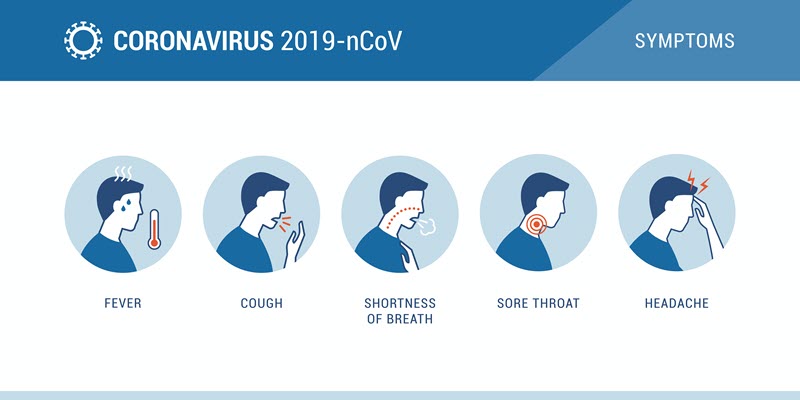
Interim Recommendations for US Households with Suspected/Confirmed Coronavirus Disease 2019 (From the CDC)
Background
There is much to learn about the novel coronavirus that causes coronavirus disease 2019 (COVID-19). Based on what is currently known about the novel coronavirus and similar coronaviruses that cause SARS and MERS, spread from person-to-person with these viruses happens most frequently among close contacts (within about 6 feet). This type of transmission occurs via respiratory droplets. On the other hand, transmission of novel coronavirus to persons from surfaces contaminated with the virus has not been documented. Transmission of coronavirus occurs much more commonly through respiratory droplets than through fomites. Current evidence suggests that novel coronavirus may remain viable for hours to days on surfaces made from a variety of materials. Cleaning of visibly dirty surfaces followed by disinfection is a best practice measure for prevention of COVID-19 and other viral respiratory illnesses in households and community settings.
Purpose
This guidance provides recommendations on the cleaning and disinfection of households where persons under investigation (PUI) or those with confirmed COVID-19 reside or may be in self-isolation. It is aimed at limiting the survival of the virus in the environments. These recommendations will be updated if additional information becomes available.
These guidelines are focused on household settings and are meant for the general public.
- Cleaning refers to the removal of germs, dirt, and impurities from surfaces. Cleaning does not kill germs, but by removing them, it lowers their numbers and the risk of spreading infection.
- Disinfecting refers to using chemicals to kill germs on surfaces. This process does not necessarily clean dirty surfaces or remove germs, but by killing germs on a surface after cleaning, it can further lower the risk of spreading infection.
General Recommendations for Routine Cleaning and Disinfection of Households
Community members can practice routine cleaning of frequently touched surfaces (for example: tables, doorknobs, light switches, handles, desks, toilets, faucets, sinks) with household cleaners and EPA-registered disinfectants that are appropriate for the surface, following label instructions. Labels contain instructions for safe and effective use of the cleaning product including precautions you should take when applying the product, such as wearing gloves and making sure you have good ventilation during use of the product.
General Recommendations for Cleaning and Disinfection of Households with People Isolated in Home Care (e.g. Suspected/Confirmed to have COVID-19)
- Household members should educate themselves about COVID-19 symptoms and preventing the spread of COVID-19 in homes.
- Clean and disinfect high-touch surfaces daily in household common areas (e.g. tables, hard-backed chairs, doorknobs, light switches, remotes, handles, desks, toilets, sinks)
- In the bedroom/bathroom dedicated for an ill person: consider reducing cleaning frequency to as-needed (e.g., soiled items and surfaces) to avoid unnecessary contact with the ill person.
- As much as possible, an ill person should stay in a specific room and away from other people in their home, following home care guidance.
- The caregiver can provide personal cleaning supplies for an ill person's room and bathroom, unless the room is occupied by child or another person for whom such supplies would not be appropriate. These supplies include tissues, paper towels, cleaners and EPA-registered disinfectants (examples at this linkpdf iconexternal icon).
- If a separate bathroom is not available, the bathroom should be cleaned and disinfected after each use by an ill person. If this is not possible, the caregiver should wait as long as practical after use by an ill person to clean and disinfect the high-touch surfaces.
- Household members should follow home care guidance when interacting with persons with suspected/confirmed COVID-19 and their isolation rooms/bathrooms.
How to clean and disinfect:
Surfaces
- Wear disposable gloves when cleaning and disinfecting surfaces. Gloves should be discarded after each cleaning. If reusable gloves are used, those gloves should be dedicated for cleaning and disinfection of surfaces for COVID-19 and should not be used for other purposes. Consult the manufacturer's instructions for cleaning and disinfection products used. Clean hands immediately after gloves are removed.
- If surfaces are dirty, they should be cleaned using a detergent or soap and water prior to disinfection.
- For disinfection, diluted household bleach solutions, alcohol solutions with at least 70% alcohol, and most common EPA-registered household disinfectants should be effective.
- Diluted household bleach solutions can be used if appropriate for the surface. Follow manufacturer's instructions for application and proper ventilation. Check to ensure the product is not past its expiration date. Never mix household bleach with ammonia or any other cleanser. Unexpired household bleach will be effective against coronaviruses when properly diluted.
- Prepare a bleach solution by mixing:
- 5 tablespoons (1/3rd cup) bleach per gallon of water or
- 4 teaspoons bleach per quart of water
- Diluted household bleach solutions can be used if appropriate for the surface. Follow manufacturer's instructions for application and proper ventilation. Check to ensure the product is not past its expiration date. Never mix household bleach with ammonia or any other cleanser. Unexpired household bleach will be effective against coronaviruses when properly diluted.
- Products with EPA-approved emerging viral pathogens claimspdf iconexternal icon are expected to be effective against COVID-19 based on data for harder to kill viruses. Follow the manufacturer's instructions for all cleaning and disinfection products (e.g., concentration, application method and contact time, etc.).
- For soft (porous) surfaces such as carpeted floor, rugs, and drapes, remove visible contamination if present and clean with appropriate cleaners indicated for use on these surfaces. After cleaning:
- Launder items as appropriate in accordance with the manufacturer's instructions. If possible, launder items using the warmest appropriate water setting for the items and dry items completely, or
Use products with the EPA-approved emerging viral pathogens claims (examples at this linkpdf iconexternal icon) that are suitable for porous surfaces.
Clothing, towels, linens and other items that go in the laundry
- Wear disposable gloves when handling dirty laundry from an ill person and then discard after each use. If using reusable gloves, those gloves should be dedicated for cleaning and disinfection of surfaces for COVID-19 and should not be used for other household purposes. Clean hands immediately after gloves are removed.
- If no gloves are used when handling dirty laundry, be sure to wash hands afterwards.
- If possible, do not shake dirty laundry. This will minimize the possibility of dispersing virus through the air.
- Launder items as appropriate in accordance with the manufacturer's instructions. If possible, launder items using the warmest appropriate water setting for the items and dry items completely. Dirty laundry from an ill person can be washed with other people's items.
- Clean and disinfect clothes hampers according to guidance above for surfaces. If possible, consider placing a bag liner that is either disposable (can be thrown away) or can be laundered.
Hand hygiene and other preventive measures
- Household members should clean hands often, including immediately after removing gloves and after contact with an ill person, by washing hands with soap and water for 20 seconds. If soap and water are not available and hands are not visibly dirty, an alcohol-based hand sanitizer that contains at least 60% alcohol may be used. However, if hands are visibly dirty, always wash hands with soap and water.
- Household members should follow normal preventive actions while at work and home including recommended hand hygiene and avoiding touching eyes, nose, or mouth with unwashed hands.
- Additional key times to clean hands include:
- After blowing one's nose, coughing, or sneezing
- After using the restroom
- Before eating or preparing food
- After contact with animals or pets
- Before and after providing routine care for another person who needs assistance (e.g. a child)
Other considerations
- The ill person should eat/be fed in their room if possible. Non-disposable food service items used should be handled with gloves and washed with hot water or in a dishwasher. Clean hands after handling used food service items.
- If possible, dedicate a lined trash can for the ill person. Use gloves when removing garbage bags, handling, and disposing of trash. Wash hands after handling or disposing of trash.
- Consider consulting with your local health department about trash disposal guidance if available.