Create a Preventative Maintenance Program for Your Home Cleaning Equipment

Unless you have employees, the biggest expense in your home cleaning business is likely your equipment and supplies. The tools of the trade can be pricey, but they're what allow you to do your job effectively and efficiently. Protecting that investment, then, is a top priority.
With proper care, vacuums and other machines can run reliably for many years. Without it, however, you'll be dealing with unexpected breakdowns and tools that die well before they should.
What are the keys to a smart preventative maintenance program for cleaning equipment?
Start From Day One
Caring for your equipment begins the day you purchase it (not months later when it starts to show signs of wear). Most house cleaners never open the owner's manual that comes along with every new machine or tool. That's a mistake.
The equipment manual is where the manufacturer shares best practices for operating and maintaining their product. Hold onto these manuals and consider laminating any service checklists included within them, and keep these with your cleaning supplies and equipment.
Also, make sure you and your staff are properly trained on the tools you use. Manufacturers and distributors of janitorial products typically offer written tests and other training materials, or you can search online for video tutorials from certified operators.
Take time to create and update an equipment procedures manual for your company. If you have employees, offer them training upon hiring and retraining on a regular basis.
Proper Care of Vacuums
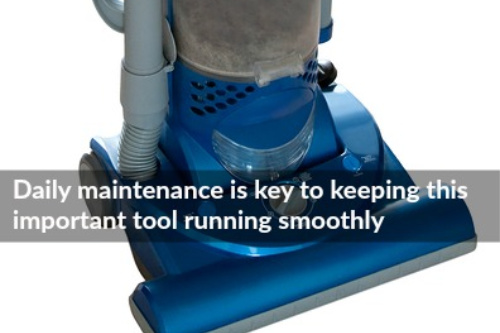
For most house cleaners, the vacuum cleaner gets more use than any other equipment. Daily maintenance is key to keeping this important tool running smoothly. Each day, perform the following inspections:
- Check the bag and replace it when it's half full (letting the bag overfill prevents the vacuum from working effectively).
- Examine the filter for excessive soil. Clean (if washable) and/or replace if needed. Also look for obstructions in the clog ports or fan chambers.
- Look inside the hose to make sure it's not heavily soiled or clogged (clean as needed) and make sure the hose is properly attached to the machine.
- Check the cord for cuts or frayed wiring and the exterior of the vacuum for cracks or broken parts. (Damaged vacuums should be replaced or sent to an authorized service center for repairs.)
- Remove any obstructions that are wrapped around the brush roller or beater bar on an upright vacuum.
Also, the brush roller typically needs to be replaced every two to three months. Also, if you notice a difference in motor sound or smell burning rubber, shut down the vacuum immediately and reinstall or replace the belt.
Battery Maintenance
If you're like many house cleaners, you've made the switch to battery-operated vacuums. You've probably noticed that batteries are becoming smaller and lighter, and holding their charges longer. Although batteries don't last forever, they can have pretty long life expectancies when properly maintained.
No matter the type of batteries you're using, some general tips include storing and charging them in a well-ventilated area that's neither extremely hot nor cold. Always wear personal protective equipment when performing battery maintenance. And keep sparks, flames, and cigarettes away from all batteries.
Follow these simple steps for deep-cycle flooded, AGM, and gel batteries:
1. Charging
- Charge after each use, following manufacturer recommendations
- Ensure the electrolyte level is above the plates before charging (flooded batteries only)
- Tighten vent caps before charging
- Don't interrupt a charge cycle and never charge a frozen battery
2. Watering (flooded batteries only)
- Add water only after fully charging the battery (unless plates are exposed)
- Check with the manufacturer regarding proper electrolyte fill levels
- Never allow the electrolyte level to fall below the plates
- Only use distilled water and never add acid to a battery
3. Cleaning
- Tighten all vent caps before cleaning
- Clean the battery and cable lugs with baking soda and water
- Don't allow anything to get inside a battery
- Rinse with water and dry
4. Equalizing (flooded batteries only)
- Connect battery to charger, set to equalize mode, and start the charge cycle
- Take readings each hour; equalization is complete when voltage no longer rises
- Talk to the battery manufacturer if the charger doesn't have an equalization setting
5. Storage
- Completely charge batteries before storing
- Keep batteries fully charged to prevent freezing
- Avoid direct exposure to heat sources, such as radiators or heaters
Other Notes
Track equipment use and maintenance by keeping a log for every piece of equipment. Keep notes of daily and routine inspections and cleanings, as well as any repairs. This log will help you remember to perform proper maintenance in a timely manner. It also allows house cleaners with employees to check entries when problems arise to determine if any employees need training.
Speaking of, trained employees can do some basic repairs. It's a good idea to have at least one person on every crew trained in the basic mechanics of every machine. When it comes to technical maintenance and expert repairs, however, these more complicated procedures should be left to qualified service professionals. Check equipment warranties carefully because some will be voided if anyone other than a service professional attempts machine repairs.
If you have a service agreement with the supplier of your vacuums, take full advantage of them. These contracts allow a house cleaner to call the vendor's technicians whenever something goes awry. If you hear a funny noise or smell burning rubber, you can catch a potential problem early and get it fixed without additional costs. This can save you money and time in the long run.
Finally, remember to budget for replacement costs whenever you purchase a new machine or tool. Eventually, every piece of equipment must be replaced no matter how well it's maintained. Build that cost into your budget so you're not hit with unexpected expenses. Being able to replace parts or machines as soon as they break will save you from lost productivity (and income).
Remember: First impressions matter. Dusty or damaged equipment may send a subtle signal to your customers that you're not running a professional operation. On the other hand, when customers see that your equipment is clean and well cared for, they'll know that you pay attention to detail.
Make Better Choices and More Informed Decisions When Buying Cleaning Equipment by Downloading the ROI Equipment Calculator Today!
 |
Attention non-members. We have the resources to make your cleaning company profitable. Follow the link for more information on Pricing and Estimating resources available to members. Start making your business profitable today! This page gives details of everything you get with membership |