Green and Sustainable House Cleaning Businesses

For many years, it was possible to set your company apart from others by advertising your use of green products. This nebulous term evoked a mental picture of house cleaners dancing around in pastures singing about nature as they sprayed natural concoctions into the air.
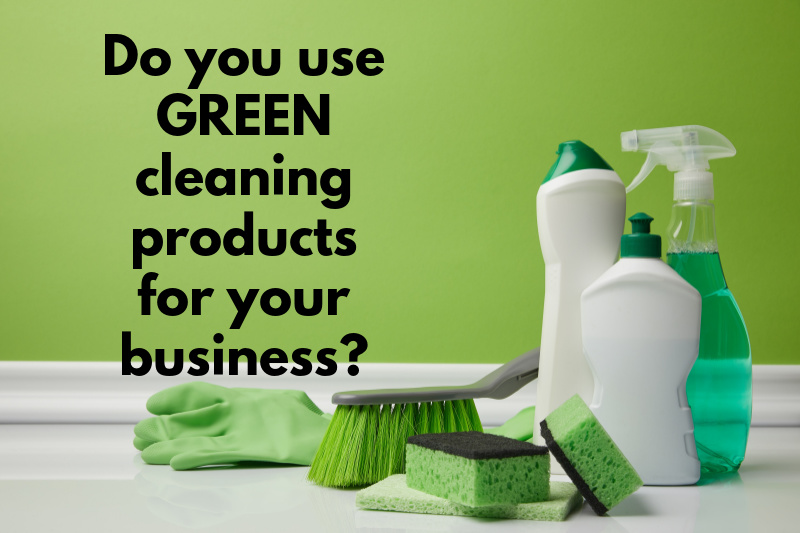
Householders felt proud that they were doing something good and liked to feel that they were taking care of their family's health by avoiding toxic chemicals. Some companies even charged more money for using green products, much as some garbage companies charged more to recycle. It was all very virtuous.
However, not everything that was advertised as being green actually met the criteria. In addition, the concept became so widely accepted that green cleaning is no longer unusual. In fact, the pendulum has swung so far in the other direction that it would be extremely unusual to find a cleaning company that doesn't advertise its green cleaning capabilities. It turns out that harmful chemicals are a hard sell.
As the owner/operator of a residential cleaning business, you may wonder how you can distinguish your company from others when it comes to being green.
- Prove that you take the green concept seriously by explaining in great detail which products you use and how they are certified. Make sure your clients know that you can support your promises and that you are not simply throwing words like “natural” and “healthy” into your marketing with reckless abandon.
- Take it one step further and delve into sustainable cleaning, something that is in great demand.
Although green and sustainable are sometimes used interchangeably, they are not the same thing.
Simply put, green cleaning means using products that are safe for humans and the environment. The term can be expanded to include cleaning methods as well as products.
- For example, HEPA filter vacuum cleaners can remove airborne particles as small as .3 microns, roughly the size of a single particle of corn starch.
- Microfiber mops and rags can remove up to 98% of bacteria and 93% of viruses with static electricity instead of water.
- Microfiber mops and rags can be color-coded to prevent cross-contamination, and can also be reused, saving on waste.
- Products should be sprayed on the cloth instead of on the surface. This keeps vapors from dissipating into the air and prevents wastage.
- Products should be certified green by third parties, such as Green Seal®, Safer Choice, ECOLOGO, or GREENGUARD.
- To reassure your clients that you are qualified to provide green cleaning, consider acquiring Green Seal's GS-49 certification.
Sustainable cleaning
Sustainable cleaning takes this one step further. Yes, the products are biologically safe, but cleaning methods and packaging are taken into account as well. Sustainable products, such as mop heads and microfiber cleaning rags seek to reduce the amount of water used, thereby making an impact on the environment. Anything that helps to fight climate change or that keeps pollution from affecting the water tables or air quality is sustainable. It literally helps to sustain the environment.
As you can imagine, it takes a great deal of effort to research sustainable practices for a cleaning company, and there are no clear-cut answers.
- For example, is it better to buy a locally sourced product instead of a cheaper one from overseas in order to reduce your carbon footprint?
- Is it possible to buy cleaning products in biodegradable containers instead of in plastic bottles that won't break down in landfills?
- Can you make a commitment as a company to reduce, reuse, and recycle?
- Can you spend the time working out how mileage can be reduced as your employees travel to each house, or are you able to invest in a company hybrid vehicle - or even an electric SUV like the Hyundai Kona Electric?
According to the Business of Sustainability Index (conducted by an Atlanta-based global environmental technology company), “Millennials (75%) are willing to pay more for environmentally sustainable products, compared to Gen Z (63%), Gen X (64%), and baby boomers (57%).” The study also found that 78% of people in the US were more likely to buy products labeled as being environmentally friendly.
In order to keep up with the competition, you should make sure that what you are calling green cleaning really deserves the term. You should also start thinking about ways that you can add a sustainability mindset to your company. Your clients will appreciate knowing about the many ways that you and your company work to protect the health of humans and to sustain the health of our environment.
EBOOK and WEBINAR DOWNLOAD Do you want to offer green cleaning services to your customers, but don't know where to begin? Green cleaning is more than using a few chemicals that are labeled "green" or "safe for the environment". Rather, it is a whole process that looks at how a home is cleaned, what equipment and supplies are used and how those products impact the environment, and providing the proper training to employees.
Green Cleaning for Residential Cleaning Companies.