4 Steps to Writing Up Employees in Your House Cleaning Business
Never an easy task, writing up an employee can be especially daunting in a small business where employees can feel like family. The longer you delay, however, the more damage the problem can do to your business, customers, and employee morale.
Use these tips to navigate the thorny issues of employee write-ups and other corrective measures. They can help you maintain fair and consistent procedures and protect your business from costly employee turnover and potential litigation.
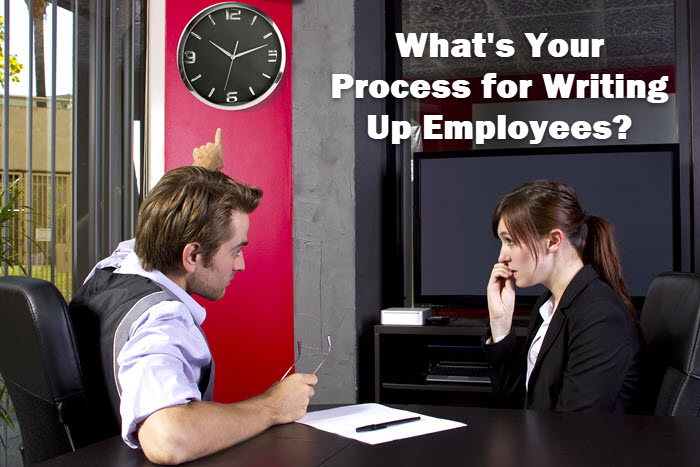
1. Take Action Early
Progressive discipline is a system of graduated, appropriate response to employee problems based on the level of severity. It provides a consistent framework for correction and documentation, making it easier to take immediate action as soon as you recognize a problem.
During orientation and training, explain your disciplinary policy to your employees. You should also include an outline of the procedure in your handbook. This can open doors to easier communication and collaboration if employee problems arise in the future.
Involving employees in the discipline process from the start can increase engagement. It shows you respect them and that you are committed to correcting issues through training and encouragement, rather than letting problems escalate.
2. Prepare Your Response
When you notice an employee problem that requires action, make notes about your observations. How long has the issue been happening? If it's a recurring problem, what steps have you taken in the past? Have you coached the employee or discussed in performance reviews? Has there been improvement, or is additional corrective action needed?
Think about the effect of the behavior on customers, other employees, and the company as a whole. How is the behavior affecting business? Is the issue performance-related (unacceptable work quality) or conduct-related (excessive absenteeism)? Is the employee capable and motivated to improve? Could an adjustment in duties or additional skills training be beneficial?
The common escalation pattern is informal counseling, followed by a verbal warning, then up to three written warnings before termination. Decide what works best for you. Some employees benefit from gentle guidance; others require the prospect of severe repercussions to make progress.
If you give a verbal or written warning at any point, be as specific as possible in describing the problem, its negative effects, and the expected resolution and timeframe. A concrete understanding of the problem and required solution can focus an employee's efforts more effectively than vague recommendations.
3. Prepare Facts and Documents
If you decide a written warning is necessary, you'll find standard templates online including 2 in our Download Library. Whether you use one of these or prepare your own, be sure to include the following:
- Employee name and date on company letterhead. This demonstrates the serious, formal nature of the warning, requirements, and consequences.
- Purpose of the disciplinary action. State the purpose specifically and indicate that the escalation is occurring because prior efforts have not had the desired effect. State that your intent is to draw attention to ongoing deficiencies in performance and/or conduct and define specific actions that must be taken to correct the situation.
- Total number of warnings employee has received. Many employers allow up to three written warnings prior to termination, but for severe issues this may be reduced to one, meaning that if the issue happens again, immediate termination will result.
- Clear description of problem. State the details including dates, times, and specific events. The more specific you are, the better the employee will understand the nature of the problem and the corrective action required. Also, you'll want this documentation if you're ever faced with legal action.
- Specific description of corrective action required. Include exact timeframe or date of required completion. Generally, the further advanced the disciplinary process, the less leniency is given to meet expectations, as escalation indicates that prior efforts have failed to correct the problem. Be very clear about the consequences of non-compliance, including termination when applicable.
- Signatures and current date. The signature of both parties demonstrates that your employee understands your expectations to remedy the problem and the consequences of non-compliance.
4. Meet with the Employee
Gather relevant resources (company manual, disciplinary policy, employee job description, past evaluations and performance records) and review them in detail before meeting with the offending employee. Compose any needed documentation in advance.
Preparing ahead of time will help reduce your stress and increase your confidence for this potentially difficult meeting. Observe confidentiality and privacy in the discussion and document any coaching, training, verbal warning, or write-up for the employee's permanent file.
During the conversation, provide ample context for your employee to understand the reasons for the disciplinary procedure, including an overview of the problem and a summary of previous meetings and action items. Listen carefully to your employee's explanation of the situation, discussing possible solutions, and refining an action plan with his or her input to resolve the problem as effectively as possible.
Document the discussion as well as any revisions or amendments to verbal or written warnings that may result from the meeting. Then work closely with your employee to correct the problem and check regularly on action plan progress, staying involved until the issue is resolved.
Employee discipline is never fun. Having a solid plan in place, however, can make the process less painful for you and the offending employee.
Are you tired of dealing with constant conflict in your cleaning business?
You know what it's like...having to deal with conflict at work. Having to tell an employee something they don't want to hear like policy violations, absenteeism or behavior problems.
This is a web-based self-study program that's your surefire solution to knowing what to do and say when things go wrong!