House Cleaning Techs Have Value -- How Do You Show Your Appreciation?

Cleaning work isn't glamorous. It's rarely a path to making millions, and it's often performed by people without advanced education. People outside the industry generally don't understand the technical, skilled nature of some cleaning work.
In short, most people don't value cleaning technicians—and some even look down on the occupation.
What's worse, owners of residential cleaning companies can also be guilty of not holding their techs in high regard.
If the COVID-19 pandemic has proven anything, it's that cleaning plays an essential role in public health. The people doing this work are essential and deserve respect. Before you assume your employees know how much you value them, consider these statistics:
- 66% of employees say they would quit if they don't get enough appreciation (Office Team, 2017)
- 69% of employees would work harder if they felt their efforts were better appreciated (socialcast, 2015)
When employees don't feel valued, turnover rates increase. That's a problem in an industry with turnover rates that can reach triple digits. It poses a very real financial threat because it costs about 20% (to as much as 200%) of an employee's annual salary to replace them (Office Vibe).
If you've failed to sincerely and clearly show your techs appreciation, now is the time to begin taking action. Three key areas to consider include your company's culture, your employee appreciation program, and your training efforts.
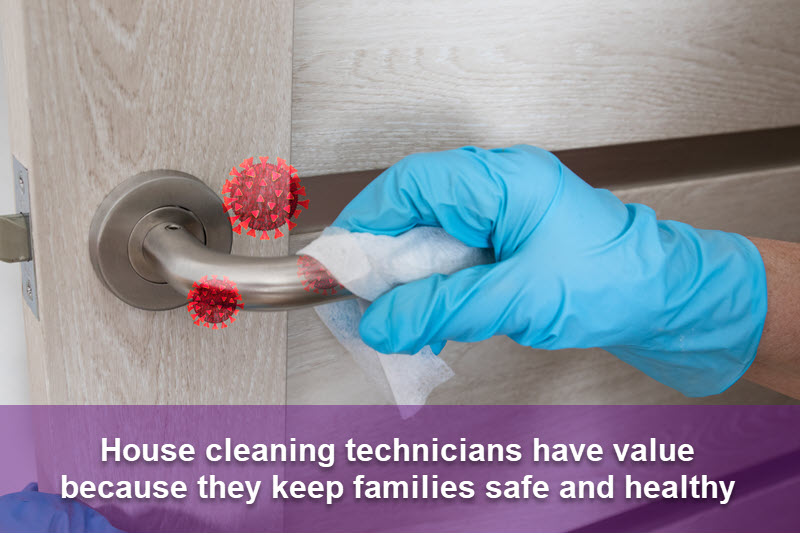
3 Ways to Add Value and Appreciation for Your Cleaning Technicians
#1 - Company Culture
Many company leaders brush off “culture” as a buzzword and a soft concept that lacks the urgency and importance of day-to-day operations or income-generating activities. In truth, however, culture matters as much as—or more than—any other element of your business.
Company culture is defined as "the set of shared attitudes, values, goals and practices that characterizes an organization." In other words, "the way we do things here."
To make employee appreciation part of company culture, you must do much more than give gifts. Far more important are things like:
- Management stating gratitude to techs on a day-to-day basis
- Leadership routinely recognizing and praising the workforce
- New employees being given a warm, personal welcome
- Techs getting the tools and training they need to do their jobs well
- Regularly and transparently communicating with staff
Make it a priority to actively develop the culture you desire. Start by conducting anonymous surveys to assess your current culture. Get your workers' candid opinions about things like leadership involvement, employee recognition, training, and overall satisfaction levels.
As you make improvements, tell your techs what is happening and why. Clear communication will help them feel even more valued. A LinkedIn study found that companies with strong company cultures have 28% lower turnover rates.
(Click here to read more about creating company culture)
#2 - Employee Appreciation
Company owners are eager to lower turnover, yet many fail to implement a formal employee appreciation program. That's a mistake because companies that develop highly effective programs have 31% lower voluntary turnover (Bersin & Associates, 2012),
Although small tokens of appreciation, like pizza parties and attendance bingo, can be useful, they aren't enough. The best programs are those that go well beyond a random “thank you” or gift here and there.
To have the greatest impact on turnover rates, employee appreciation needs to be a conscious, routine effort that is an integrated part of your business. In short, you must reward employees for outstanding work on a regular basis.
It's best to give recognition more frequently than you think is needed. A Gallup poll says once a week is ideal because that's how long it takes for the rush of dopamine for a job well done to wear off.
When developing your program, take these five steps:
- Determine what you'll reward: What attitudes and actions (attendance, safety, productivity) do you wish to promote in your employees?
- Outline the reward process: Who will select winners, how often, and based on what criteria?
- Decide who you'll reward: Who is eligible for recognition (full- and part-time workers? managers?) and how often can they be rewarded?
- Select the rewards: Consider asking your employees what rewards they prefer and, whenever possible, personalize rewards for each recipient.
- Announce the program: Tell employees exactly how the program works and when it will begin, and get them excited with a fun kick-off event.
As long as you put some thought into it, almost any recognition program will make your employees feel better about the work they do and about you as an employer.
(Click here to read more about employee recognition programs)
#3 - Training
Finally, perhaps nothing makes employees feel more valued than training. Workers are happiest when they are allowed to develop new skills and sharpen existing ones. An ongoing, quality training program clearly communicates that you care about helping your workers succeed.
(Click here to read about the four steps to a successful training program)
If you've let your company's training program slip during the pandemic—or if you didn't have a strong one to begin with—don't wait to fix things.
The economic uncertainty in the months and years ahead could force many house cleaning companies to close their doors. Those with a poor culture and insufficient training will be most likely to lose employees and customers.
Need help? MyHouseCleaning.Biz offers a number of Employee Training Programs on a variety of topics.

Are you tired of dealing with constant conflict in your cleaning business?
You know what it's like...having to deal with conflict at work. Having to tell an employee something they don't want to hear like policy violations, absenteeism or behavior problems.
This is a web-based self-study program that's your surefire solution to knowing what to do and say when things go wrong!